A teenager on trial for murder told a fellow inmate he would “do it again” after being accused of killing girls, a court has heard.
Hassan Sentamu, 18, allegedly murdered 15-year-old Elianne Andam, who was fatally stabbed in the neck during a row over a teddy bear outside a shopping centre in south London in September 2023.
A month after Elianne’s knife death, Sentamu got into a row with a fellow inmate in youth custody, jurors were told.
When he was accused of killing girls, Sentamu responded by saying: “I’ll do it again. I’ll do it to your mum,” the Old Bailey heard.
Image: Elianne Andam. Pic: PA
Sentamu, who was 17 at the time of the attack outside the Whitgift Centre in Croydon on 27 September 2023, has claimed his autism spectrum disorder caused him to lose control during the meeting to exchange belongings with his ex-girlfriend, who was Elianne’s friend.
The prosecution told the court on Friday that his case was built on “flimsy foundations”.
There was no evidence that autism caused Sentamu to lash out in “frenzied murderous violence”, prosecutor Alex Chalk KC said, but instead, he was annoyed over “an earlier incident of perceived disrespect”.
Mr Chalk said: “He was angry on 27 September, having brooded on the insult and he took the knife to the scene to reassert dominance.
“He exacted vengeance on a young girl clearly running away from him and posing no threat.”
Defence barrister Pavlos Panayi KC said there were “two sides of the coin” as he set out Sentamu’s case.
It was not disputed the killing was a “grotesque overreaction” to Sentamu being splashed with water during a meeting with Elianne and her friends the day before.
Mr Panayi suggested a “central issue” in the case was Sentamu’s autism history and symptoms.
Sentamu, who was studying sports science at Croydon College, has admitted manslaughter but denies Elianne’s murder and having a blade.
A Russian spy was living in a “typical seaside hotel” on the English coast crammed full of electronic surveillance equipment, a court has heard.
Orlin Roussev boasted to his controller that he was becoming like the James Bond character “Q” as he prepared his spying “toys” for kidnap and surveillance operations across Europe.
He is said to have taken instructions from a handler called Jan Marsalek, who is wanted in connection with a £1.6bn tech fraud linked to a company called Wirecard.
Roussev, 46, a Bulgarian national, has pleaded guilty to running a spy ring on behalf of the Russians, but three other members of the group deny the charges.
Image: Orlin Roussev pleaded guilty to running a spy ring on behalf of the Russians. Pic: Met Police
The Old Bailey was told a “vast” amount of technical equipment for “intrusive surveillance” was found at Roussev’s address in Great Yarmouth, Norfolk, which he described in messages as his “Indiana Jones warehouse”.
The Haydee guest house on Prince’s Road had 33 rooms according to Dan Pawson-Pounds, prosecuting.
Inside three of them was a “significant amount of IT and surveillance equipment”. It was stacked up in two storage rooms and an office used by Roussev, the court was told.
The jury heard that Operation Skirp seized 3,540 exhibits from a number of addresses, including 1,650 digital exhibits, and was shown two “IMSI grabbers” – a black metal box capable of capturing mobile phone numbers from a nearby area.
Image: An IMSI grabber, which can capture mobile phone numbers from a nearby area. Pic: Duncan Gardham/MPS
Both devices were described as “law enforcement grade” and could be used to intercept or disrupt targeted mobile phone communications and to identify an individual phone by their IMSI and IMEI numbers, in conjunction with a direction-finding unit.
The spies planned to use them outside a US military base in Stuttgart, Germany, to gather information from the phones of Ukrainian servicemen who were being trained to operate Patriot missile defence batteries, the prosecution said.
The information would have allowed them to track the servicemen back to Ukraine and identify where the missiles were fired from, but the plan was foiled when the men were arrested in February last year.
Read more on the trial: Five suspected of spying for Russia charged, CPS says Spies in love triangle to be used in ‘honeytrap’ across Europe Spies plotted to kidnap Salisbury attack journalist
Image: Pic: Duncan Gardham/MPS
Gadgets with hidden cameras part of evidence
Other findings included pendant necklaces with hidden cameras, water bottles with mobile phone-linked video surveillance capability, a Pandora car key cloning device, and more traditional surveillance equipment such as night vision binoculars and mobile radios.
Image: Pic: Duncan Gardham/MPS
The spy ring’s members allegedly included Katrin Ivanova, 33, a lab assistant from Harrow, North London, Vanya Gaberova, 30, a beautician from Acton, West London, and Tihomir Ivanchev, 39, a painter and decorator from Enfield.
Roussev and Biser Dzhambazov – a 43-year-old man from London who is also an alleged member of the ring – have both pleaded guilty to conspiracy to collect information useful to an enemy.
Gaberova, Ivanova, and Ivanchev all deny the charges and the trial continues. All five are Bulgarian nationals with “settled status” in the UK.
More equipment – including a black cap with a concealed camera and a one-litre plastic Coke bottle with waterproof camera behind the label – was found in the lounge at a North London flat shared by Ivanova and Dzhambazov, the trial has heard.
Soldiers working within the UK’s special forces discussed concerns that Afghans who posed no threat were being murdered in raids against suspected Taliban insurgents, an inquiry has been told.
One soldier, who was reading operational reports of SAS actions, said in an email in 2011 that they feared that UK special forces seemed “beyond reproach”, with “a golden pass allowing them to get away with murder”.
Another soldier said they were aware of rumours of special forces soldiers using “dropped weapons” – which were munitions allegedly placed next to targets to give the impression they were armed when they were shot.
It was also suggested that the act was known as a “Mr Wolf” – supposedly a reference to the fixer “Winston Wolfe” from the film Pulp Fiction.
The claims come from hundreds of pages of documents detailing evidence given to a public inquiry into alleged war crimes committed by British special forces soldiers in Afghanistan between 2010 and 2013.
The independent inquiry was ordered by the Ministry of Defence (MoD) after the BBC reported claims that SAS soldiers from one squadron had killed 54 people in suspicious circumstances during the war in Afghanistan more than a decade ago.
The inquiry is examining a number of night-time raids carried out by British forces from mid-2010 to mid-2013.
On Wednesday, it released evidence from seven UK special forces (UKSF) witnesses who gave their evidence in secretfor national security reasons and cannot be named.
None of the soldiers who gave evidence to the inquiry, which opened in 2023, said they had witnessed any such behaviour themselves.
‘Fighting age males’
One of the soldiers, known only as N1799, told the inquiry they had raised concerns in 2011 about a unit referred to as UKSF1 after having a conversation about its operations with one of its members on a training course.
“During these operations it was said that ‘all fighting age males are killed’ on target regardless of the threat they posed, this included those not holding weapons,” their witness statement said.
“It was also indicated that ‘fighting age males’ were being executed on target, inside compounds, using a variety of methods after they had been restrained. In one case it was mentioned a pillow was put over the head of an individual before being killed with a pistol.”
The soldier said he was also informed that weapons were being “dropped” next to victims “to give the impression that a deceased individual had been armed when shot”, the inquiry heard.
Such a dropped weapon was colloquially known as a “Mr Wolf”, but N1799 stated he had “no idea at all” where the term came from.
Read more from Sky News: Sauna users urged to hydrate after woman suffers heart attack Boy, 14, stabbed to death on London bus
Counsel to the inquiry Oliver Glasgow KC asked: “When you heard it described as a ‘Mr Wolf’, was that used by one person or by more than one person or can you not remember?”
N1799 replied: “At least two or three people.”
Mr Glasgow continued: “Have you seen the film Pulp Fiction by Quentin Tarantino, where the individual who introduces himself as Mr Wolf says ‘I’m Mr Wolf and I’m here to solve problems’? Do you remember that?
The witness said: “No, I don’t.”
Mr Glasgow said: “Well, it is probably not essential viewing for anyone, but that particular individual in that film, he acts to clear up problems and to make crimes go away, does he not?”
N1799 responded: “Right. I had not put two and two together.”
The inquiry heard that N1799 escalated their concerns to other senior officers who took them seriously.
But, questioned by Mr Glasgow on whether they had any concerns for their own personal wellbeing after making allegations, the witness said: “I did then and I still do now.”
‘Mud-slinging’
Another officer, referred to as N2107, emailed colleagues expressing his disbelief at summaries of operations which suggested detained suspects had been allowed back into compounds where they were then said to have picked up weapons and attempted to attack the unit.
Meanwhile, a special forces commanding officer told the inquiry he believed reporting allegations of murder to his counterpart in another unit may have been seen as “mud-slinging”.
He said there was an “at times fractious and competitive” relationship between his unit and the accused unit.
In one of the hearings, he was asked whether he thought about reporting the allegations to his direct counterpart within the unit, but said it was a “deliberate act” to report up rather than sideway as it may be seen as “mud-slinging”.
British military police have previously conducted several inquiries into allegations of misconduct by forces in Afghanistan, including those made against the SAS.
However, the MoD has said none found enough evidence for prosecutions.
The inquiry’s aim is to ascertain whether there was credible information of extra-judicial killings, whether investigations by the military police years later into N1799’s concerns were properly conducted, and if unlawful killings were covered up.
Two female Russian spies in a love triangle were to be used as “honeytraps” in a surveillance operation on targets across Europe, run from the UK, a court has been told.
Katrin Ivanova, 33, a lab assistant, and Vanya Gaberova, 30, a beautician, were intended to be “in direct contact” with targets “as sexual bait to capture more information”, the Old Bailey heard.
They were allegedly assisted by Tihomir Ivanchev, 39, a painter and decorator from Enfield who had previously been in a relationship with Gaberova.
Bizer Dzhambazov, 43, a medical courier who has pleaded guilty to the spying conspiracy, lived with Ivanova in Harrow, northwest London, but was also having a relationship with Gaberova, who had a flat in Euston.
Image: Bizer Dzhambazov. Pic: Met Police
Alison Morgan KC, prosecuting, told the jury: “They may each, in different ways, seek to rely on these relationships to suggest that they were in some way misled, or that they were blindly following others or going around Europe simply out of love.
“The prosecution’s case is that they were all knowingly involved in this conspiracy. This is not the sort of activity that you conduct simply because of a romantic relationship.”
The spy ring was allegedly run by Orlin Roussev, 46, who lived in a guest house in Great Yarmouth and “tasked” a network of spies who included Ivanova, Gaberova, and Ivanchev.
He has also pleaded guilty to the conspiracy.
Image: Orlin Roussev. Pic: Met Police
The spy ring was allegedly directed by a Russian agent called Jan Marsalek, 43, an Austrian national who used the online alias “Rupert Ticz”.
“By gathering the information and passing it on to the Russian state, the defendants were, make no mistake, putting many lives at risk,” Ms Morgan said.
The activity is said to have taken place between 30 August 2020 and 8 February 2023 in locations including London, Vienna, Valencia, Montenegro and Stuttgart.
Each received “significant sums of money for their actions”, Ms Morgan said, and their activities “caused obvious and inevitable prejudice to the safety and interests of the United Kingdom”.
Messages and money
Nearly 80,000 Telegram messages were recovered between Marsalek and Roussev, showing the “genesis and planning of the operations”.
“There are messages about Russia in general and direct references to President Putin in particular,” Ms Morgan said.
When police raided Roussev’s home in Great Yarmouth, they found it packed with technical equipment including 221 mobile phones, 258 hard drives, 495 SIM cards, 55 visual recording devices and 11 drones.
There were also Wi-Fi eavesdropping devices and items including jammers, cyber exploitation hardware, hacking software, card readers and GPS trackers.
There were 91 bank cards in the names of 17 individuals and 75 passports and identity documents in 55 individuals’ names.
Ms Morgan told the Old Bailey: “Over a period of nearly three years, they sought to gather information for the benefit of Russia, an enemy of the UK, about various targets, both people and locations, of particular interest to the Russian state.”
The operations
Bulgarian journalist Christo Grozev investigated the Salisbury poisonings for an investigative journalism group called Bellingcat, identifying the poisoners as coming from a Russian military unit called GRU29115.
As a result of his activities, Grozev was placed on the “wanted” list by the Russian Interior Ministry, the court was told, and targeted by the ring.
Read more from Sky News: Daniel Khalife ‘entered new phase of spying’ Trainee nurse guilty of suicide bomb attack plot
The court also heard they targeted a man called Roman Dobrokhotov, a Russian national living in Britain who founded a media outlet called The Insider.
He had been forced to flee Russia in August 2021 after he was arrested and his passport removed.
The spy ring is said to have conducted surveillance at Patch Barracks, a US military Base in Stuttgart where they believed Ukrainian military forces were being trained in late 2022.
The court heard how in London, they planned to stage a demonstration outside the Kazakhstan embassy, in order to pretend they were in possession of genuine intelligence about those responsible, which they would then pass on to the Kazakhstan intelligence services, in order to try to gain favour on behalf of Russia.
They are also allegedly targeted Kazakhstani dissident Bergey Ryskaliyev.
Another target was Kirill Kachur, a Russian national who was living in Montenegro before he left the country in 2021 and was designated as a “foreign agent” by Russia, the court heard.
Mr Justice Hilliard adjourned the trial until Monday.
Benjamin Mendy was lent money by Manchester City teammates when the club stopped paying him after he was charged with rape and sexual assault, an employment tribunal has heard.
Current and former players Raheem Sterling, Bernardo Silva and Riyad Mahrez supported the French international, who now claims to be owed £11.5m in unpaid wages by the Premier League champions.
The 30-year-old’s £500,000 per month wage was withheld by the club after he was charged in 2021, the tribunal was told.
The World Cup winner was subsequently cleared.
Mr Mendy, who now plays for French Ligue 2 club Lorient, brought employment tribunal proceedings against Manchester City, claiming for “unauthorised deductions” from wages.
His contract showed he would also receive a £900,000 bonus for appearing in 60% of matches, a £1m bonus if City qualified for the Champions League, and an annual £1.2m payment to his image rights company.
Court documents shared with the Manchester employment tribunal said Mr Mendy “very quickly ran out of money”.
He then had to sell his Cheshire mansion to cover legal fees, bills and child support payments after his wages were withheld.
Read more from Sky News: Strictly star ‘heartbroken’ over viral footage Thousands denied weight loss jab King faces snub from senior Australian politicians
Mr Mendy said his agent, Meissa N’diaye, paid towards his legal fees, while teammates including England international Sterling offered “financial support”.
“Raheem Sterling, Bernardo Silva and Riyad Mahrez all lent me money to help me try and pay my legal fees and support my family,” he said in his witness statement.
Mr Mendy, appearing via videolink, told the tribunal he and his agent had been assured by Man City’s then chief football operating officer Omar Berrada that he would receive his unpaid wages once he had been cleared of the charges.
Spreaker
This content is provided by Spreaker, which may be using cookies and other technologies.
To show you this content, we need your permission to use cookies.
You can use the buttons below to amend your preferences to enable Spreaker cookies or to allow those cookies just once.
You can change your settings at any time via the Privacy Options.
Unfortunately we have been unable to verify if you have consented to Spreaker cookies.
To view this content you can use the button below to allow Spreaker cookies for this session only.
Enable Cookies
Allow Cookies Once
👉 Click to subscribe to the Sky News Daily wherever you get your podcasts 👈
The footballer sent Mr Berrada a WhatsApp message in November 2022, asking if he could confirm in writing that the wages would be paid, the tribunal heard.
But Mr Berrada did not reply to the message, and denied ever having made such an assurance.
After his acquittal, Mr Mendy sent an email to Khaldoon Al Mubarak, the Emirati chief executive of Manchester City, but again received no response.
The club continued paying Mr Mendy following his first arrest in November 2020, but has argued it did not have to carry on doing so later because his bail conditions and Football Association suspension meant he was not able to perform his duties as a player.
Mr Mendy was found not guilty of six counts of rape and one count of sexual assault in January 2023, but the same jury could not reach a verdict on another count of rape and one count of attempted rape.
It saw a retrial and Mendy was found not guilty of one charge of rape and one charge of attempted rape.
In April, a High Court tax debt case against Mr Mendy was dismissed after he paid a £700,000 bill.
The employment tribunal is expected to last for two days.
A 13-year-old girl in “unbearable” pain asked her mother if she would die before she passed away from sepsis, an inquest has heard.
Chloe Longster was rushed to the emergency department of Kettering General Hospital, Northamptonshire, on 28 November 2022 after she woke up with pain in her ribs and cold-like symptoms.
She was admitted that evening to a paediatric ward, Skylark, before later being transferred to intensive care, where she was intubated.
However, Chloe died the following morning.
An inquest into her death, which began at Northampton Coroner’s Court on Monday, heard Chloe’s mother, Louise Longster, tell assistant coroner Sophie Lomas that her daughter’s pain relief was “delayed”.
Her parents claimed that the teen’s death was “completely preventable” and said the family had been left “devastated” by it.
Mrs Longster told the inquest her daughter was “wincing and squirming” from the pain while in hospital.
She said: “Chloe asked if she could be put to sleep because it was unbearable. I remember thinking how pale and clammy she looked.
“It’s harrowing to see your own child in so much pain.
“She was clock-watching constantly – she knew when her paracetamol and ibuprofen were due and it was always delayed.
“It was like we were chasing her pain rather than getting on top of it.
“Chloe asked me on Skylark if she was going to die. It’s haunting that the 13-year-old was the one that was right. It’s devastating.”
Image: Louise Longster, the mother of 13-year-old Chloe Longster. Pic: PA
It was only when Chloe was moved to a side room and diagnosed with influenza A that it was “taken seriously or acknowledged how much pain she was in”, Mrs Longster added.
A&E consultant Dr Marwan Gamaleldin saw Chloe three or four times before she was transferred to the paediatric ward.
Read more from Sky News: Thunderstorm warning for parts of UK ‘No third-party involvement at this time’ in case of missing nurse Couple and dog found dead at house
Follow Sky News on WhatsApp
Keep up with all the latest news from the UK and around the world by following Sky News
Tap here
He said he believed she had a chest infection at the time and that “pain was the main thing”.
“She had four doses of pain relief with three different medications, I appreciate that maybe it was not enough, but it was four doses of pain relief,” he said.
Dr Gamaleldin added that in the two-hour period he observed Chloe, he “did not think” that she had sepsis as she did not show either of the mandatory markers used to diagnose the condition – high white blood cell count or a fever.
At least one other staff member also spoke to the inquest.
A woman died from a heart attack after she was raped by a stranger while unconscious on a park bench, a court has been told.
Warning: This article contains details readers may find distressing
Natalie Shotter, 37, had been on a night out before she was sexually assaulted and killed on a park bench in Southall Park, west London, jurors heard.
Mohamed Iidow, 35, is on trial accused of rape and manslaughter. He has denied both charges.
Ms Shotter died of a heart attack caused by Iidow raping her “again and again”, prosecutor Alison Morgan KC told jurors.
The court was shown CCTV footage of Ms Shotter sitting on a bench with a different man when, the prosecution says, Iidow walked past and looked at them.
He then left the park and drove away, before returning later, jurors heard.
The prosecutor said Ms Shotter was lying down and showing “no clear movement” for around 30 minutes before the defendant approached her “nonchalantly”.
During the alleged attack, the victim was “deeply unconscious”, she said.
Ms Morgan continued: “What was the defendant doing there, what was he seeking to do, walking up and down the paths in the middle of the night and thinking about what his objectives must have been – seeking out a vulnerable woman to rape.”
Jurors were shown CCTV which, the prosecution said, showed the defendant moving Ms Shotter’s body into different positions as he raped her.
Ms Morgan told jurors: “She was not dead at the time when the defendant was orally raping her, it will be a matter for you to consider – that this defendant went to the park for a reason.
“He would not have sought to have sex with a dead body for over 15 minutes, he was having sex with someone he knew was alive but was deeply unconscious and therefore he was raping her.”
Follow Sky News on WhatsApp
Keep up with all the latest news from the UK and around the world by following Sky News
Tap here
Ms Shotter’s body was found in Southall Park by a passer-by in the early morning of July 17 2021, the court previously heard.
Swabs taken from Ms Shotter’s mouth area matched DNA samples taken from the defendant, the court heard.
A placard held by a woman at a pro-Palestinian protest depicting former prime minister Rishi Sunak and ex-home secretary Suella Braverman as coconuts was “racially abusive”, a court has heard.
Marieha Hussain, 37, of High Wycombe, pleaded not guilty to a racially aggravated public order offence at Westminster Magistrates’ Court on Thursday.
As the trial began, about 40 pro-Palestinian protesters gathered outside the building.
Image: The trial is taking place at Westminster Magistrates’ Court in London. Pic: iStock
Prosecutor Jonathan Bryan told the court the term “coconut” was a “well-known racial slur which has a very clear meaning”.
“You may be brown on the outside, but you’re white on the inside. In other words, you’re a race traitor – you’re less brown or black than you should be,” he said.
He argued Hussain had “crossed the line between legitimate political expression” and moved into “racial insult”.
“We say that the placard was abusive, it was racially abusive,” he told the court.
“There were people present who were likely to have been caused harassment, alarm and distress by seeing what was on that placard.”
Follow Sky News on WhatsApp
Keep up with all the latest news from the UK and around the world by following Sky News
Tap here
An image of the placard, held by Hussain at a pro-Palestinian protest on 11 November, was shown in court.
It showed cut-out pictures of Mr Sunak and Ms Braverman placed alongside coconuts under a tree.
Defending, Rajiv Menon KC, said the placard was a “political criticism” of Mr Sunak and Ms Braverman.
He told the court: “What she is saying is Suella Braverman – then home secretary, sacked two days after – was promoting in different ways a racist political agenda as evidenced by the Rwanda policy, the racist rhetoric she was using around small boats.
“And the prime minister was either quiescing to it or being inactive.
“It was a political criticism of these two particular politicians.”
Read more from Sky News: First images of historic private spacewalk Spurs star charged by FA over racist joke Holly Ramsay and Adam Peaty engaged
Metropolitan Police communications manager Chris Humphreys told the court that images come to the attention of the police service if the force’s social media account is “tagged in the post”.
He added the force “actively monitors” accounts that frequently post protest-related images.
Mr Menon told the court the image of the placard had been posted by an X account with the username Harry’s Place.
He asked Mr Humphreys: “Are you aware that Harry’s Place is a secretive political blog headquartered in Washington DC that has a particular interest in opposing any criticism of the Israeli state?”
Mr Humphreys replied: “I know Harry’s Place is an anonymous political blog.”
A four-year-old boy died from sepsis despite several visits to a hospital within a week, an inquest has heard.
Daniel Klosi was taken to the Royal Free Hospital in Camden, north London, four times in a week, including twice in one day. He died on 2 April 2023.
Poplar Coroner’s Court heard on Tuesday that hospital staff missed or made incomplete checks on the child in the days leading up to his death.
In a statement, his father Kastriot Klosi described Daniel, who had autism, as a “lively boy” with no other health issues.
Image: Daniel with his father Kastriot Klosi. Pic: PA
Mr Klosi said he and the boy’s mother Lindita Alushi noticed their son was “wheezing and had a barking cough” on 26 March.
The court heard Daniel was diagnosed with crepitation of the lungs after being taken to the Royal Free emergency department.
Four days later on 30 March, they returned to hospital and a doctor and nurse insisted Daniel had picked up a virus, and sent him home to “rest”.
Daniel then “suddenly stopped eating and drinking” on 1 April, Mr Klosi said.
He said he and Ms Alushi called 111 and were booked in for triage at 1pm at the Royal Free, where they were told again the four-year-old had a virus.
“I was really concerned and I felt as if the doctor was fixated on telling me Daniel had a virus rather than finding out what the real problem was,” Mr Klosi added.
Image: The Royal Free Hospital in north London. File pic
After Daniel was again discharged, the family went back at 4.30pm the same day and the boy started “deteriorating” in front of them, with his nose, hands and feet “turning purple” and his lips becoming cracked and blue.
He died early on 2 April.
Follow Sky News on WhatsApp
Keep up with all the latest news from the UK and around the world by following Sky News
Tap here
A number of doctors and medical staff then told the court they had followed guidelines when treating Daniel, but admitted they should have asked for more observations and would have acted differently in hindsight.
Dr Shrabhi Agarwal, who first saw Daniel at around 3.30am on 31 March, told the court “all the [viral] swabs were negative and Daniel was feeling better” an hour after the tests.
The court heard the last set of medical observations of Daniel during the visit was at 4.30am, but he was not discharged until 8am. Dr Agarwal agreed it was “too long a gap” when asked by coroner Mary Hassell.
She also said “in hindsight, maybe we could have started him on antibiotics earlier” when asked if she would do anything differently.
Read more on Sky News: Woman jailed for stealing £1m worth of chicken wings Glasgow city centre locked down after woman hit by car
Lucy Parker, who was Daniel’s triage nurse on 1 April, then said she could not carry out a full observation because of the boy’s “distress”.
She said that the “observations I did manage to obtain” showed “there were no immediate alarm bells ringing,” meaning Daniel’s heart rate and blood pressure were not recorded.
Dr Kavita Sumaria, a paediatric consultant who met Daniel and his father as she was finishing her morning shift on 1 April, also told the court she did not realise it was Daniel’s third visit to the hospital at the time.
An undercover agent has told a court how he exchanged messages with a man accused of plotting to murder Holly Willoughby on a group called Abduct Lovers and believed he was an “imminent threat”.
The US police officer began giving evidence on Thursday in the trial of 37-year-old Essex man Gavin Plumb.
Using the alias David Nelson and appearing anonymously via video link, he said his job was to infiltrate social media to look for suspected kidnapping and human trafficking.
He told Chelmsford Crown Court that Abduct Lovers was a group discussing kidnap, rape, and murder.
Nelson said Plumb had posted four images of Willoughby with the quote “the one in the public eye I want” and claimed to know where she lived, when she left home, and the times she didn’t have security.
“I felt there was an imminent threat from this individual,” Nelson said.
The officer, from Minnesota, told the court he sent Plumb a private message to see if he was serious or a fantasist.
Plumb is said to have replied with information including a Google map showing his route to Willoughby’s home and details of her car.
He also allegedly shared video of his kidnap kit and bottles of chloroform – a liquid that can make someone unconscious.
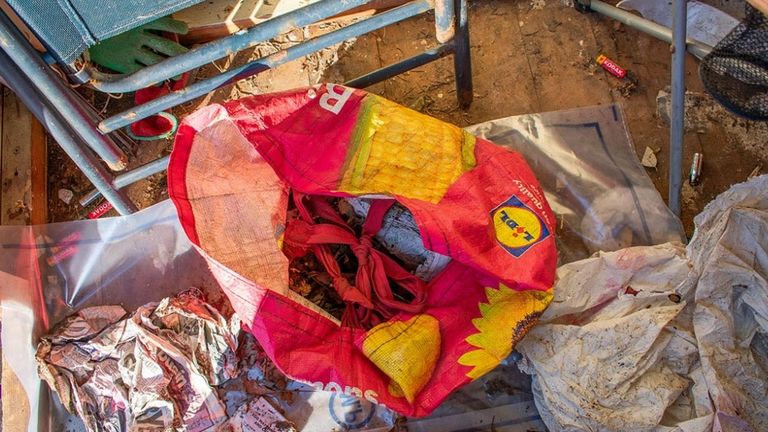
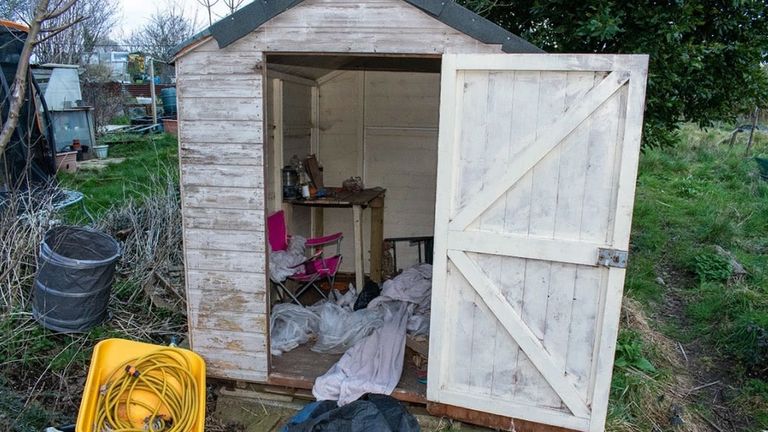
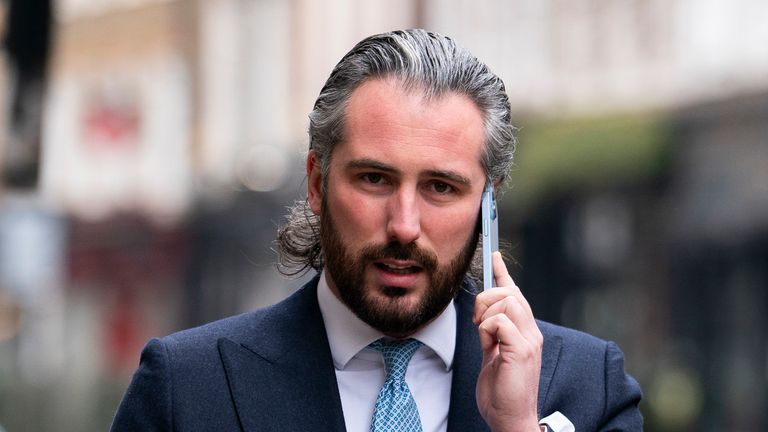
Image: Plumb is said to have sent this selfie titled ‘my ugly mug’ to the officer
“Earlier in the conversation he had indicated he had chloroform,” Nelson told the court.
“It was not present in that photo of his abduction kit – I asked where the chloroform was and he sent a picture.
“At that point in the conversation it was quite alarming,” he added.
Read more from Sky News: Jay Slater’s employer urges people to stop sending ‘cruel’ emails Former Grange Hill star reveals skin cancer diagnosis
In an effort to win Plumb’s trust, he said he sent him flight details and fake ID to show his willingness to be an accomplice in the alleged plot.
He told jurors he asked for a picture of the Essex man to establish his identity, with Plumb sending a selfie with the caption “my ugly mug”.
Nelson said he also asked about where he lived and worked – all the while feeding it back to US authorities.
Follow Sky News on WhatsApp
Keep up with all the latest news from the UK and around the world by following Sky News
Tap here
He told the court that on 4 October 2023, there was a meeting with FBI and Metropolitan Police representatives where he shared his intelligence.
Plumb, from Harlow, denies soliciting murder, incitement to rape, and incitement to kidnap.